


How to Recognize Signs of a Gas Leak in Your Home
Detecting a gas leak early can make all the difference in safety and repair costs, especially in Houston's humid climate that accelerates corrosion. Look for these common indicators that require immediate professional evaluation:
- A distinctive sulfur or rotten-egg odor near appliances, meters, or outdoor lines
- Hissing or whistling sounds coming from pipes or connections when appliances are off
- Bubbling in standing water near the gas meter or along buried line paths
- Dead or dying vegetation in a straight line above underground pipes
- Unusually high gas bills with no change in household usage
- Sudden onset of headaches, dizziness, nausea, or flu-like symptoms indoors
How Our Technicians Locate Gas Leaks Safely and Accurately
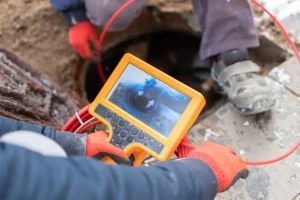
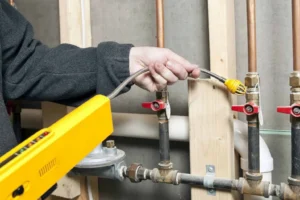
Our licensed Houston plumbers use advanced, non-destructive methods to pinpoint gas leaks without unnecessary digging or demolition. The process begins with a thorough safety check, including shutting off the main gas valve if needed, followed by electronic gas detectors that sense even trace amounts of natural gas or propane in the air. We then perform pressure testing on isolated line sections, use ultrasonic leak detectors for pinpoint accuracy on fittings and joints, and conduct soap-bubble testing on accessible connections to confirm the exact source before any repair begins.
Types of Gas Line Repair Work We Perform
Once the leak is located, we perform precise repairs tailored to the pipe type, location, and severity of damage, always following Railroad Commission of Texas standards and local Houston codes. Common repair services include:
- Replacement of corroded or cracked black iron or CSST sections
- Repair or reconnection of flexible appliance connectors and shut-off valves
- Fixing leaking joints, fittings, or threaded connections with proper sealing compounds
- Installation of new tracer wire and protective sleeves on buried lines
- Pressure testing and purging of the entire system after repair
- Adding or upgrading emergency shut-off valves for added safety