


Common Sewer Line Problems in Houston Homes
Our sewer line repair services help Houston homeowners and property managers eliminate the most frequent causes of backups, slow drains, foul odors, and recurring clogs that plague older homes and neighborhoods throughout Greater Houston. By using modern trenchless technologies, we address these issues effectively without major excavation, restoring full flow and preventing expensive future failures in a city where clay soils, tree roots, heavy rainfall, and aging infrastructure create constant challenges for underground plumbing systems.
The Leading Causes of Sewer Line Damage & Blockages
Here are the most common problems we encounter during sewer line inspections and repairs in Houston:
- Improper use of the system — flushing non-degradable items such as ""flushable"" wipes, feminine hygiene products, paper towels, diapers, sanitary napkins, cotton swabs, and plastic bags that accumulate and create massive blockages over time
- Limited or no access points — many homes were built with sewer lines running under slabs, driveways, or interior walls, requiring destructive demolition just to reach the pipe for traditional repairs
- Heavy grease buildup — kitchen fats, oils, and food scraps solidify inside pipes, forming thick layers that trap debris and promote bacterial growth, especially in high-use households
- Slab-encased lines with no crawl space — in typical slab-on-grade Houston construction, sections of sewer pipe are embedded in concrete, making conventional repair extremely invasive and costly
- Improper pipe slope and bellies — poor original installation or soil settlement creates low spots (""bellies"") where water and solids pool, leading to chronic stagnation and complete blockages
- Multiple vertical stacks joining horizontal runs — junctions where two or more drain lines connect horizontally become natural collection points for debris and the most frequent locations for recurring clogs
- Aging cast iron or clay pipes — decades-old cast iron and vitrified clay pipes develop internal roughness, cracks, joint separation, and root intrusion that trap waste and accelerate deterioration
- Failed joints and leaks — outdated bell-and-spigot or lead/caulk connections lose their seal over time, allowing groundwater infiltration, root entry, and gradual pipe separation
Our Trenchless Sewer Line Repair Process in Houston
We solve most of these problems using proven trenchless pipe lining (CIPP) and spot repair methods that minimize disruption to your yard, driveway, and home interior. The typical repair process includes the following carefully sequenced steps:
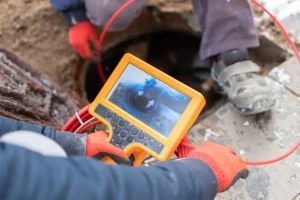
- High-resolution CCTV video inspection to assess current pipe condition, measure lengths, locate breaks, roots, offsets, and measure pipe diameter
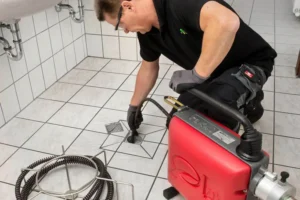
- Mechanical snaking and/or hydro-jetting of vertical stacks and horizontal runs to remove roots, grease, scale, and debris
- Preparation and insertion of a custom-fit epoxy-saturated felt liner (sleeve) into the damaged section of pipe
- Curing (polymerization) of the liner using hot water, steam, or UV light to create a new, seamless structural pipe inside the old one
- Cutting precise openings for laterals, tees, cleanouts, or branches using robotic cutters
- Installation and curing of structural connection fittings (tees, wyes, cleanouts) to ensure proper flow and access
- Final post-lining CCTV video inspection to verify full coverage, smooth transitions, and structural integrity
- Preparation of a detailed video report and documentation for your records and insurance purposes
Ready to stop recurring sewer backups for good? Contact our Houston sewer line specialists today for a free consultation, on-site video inspection, and personalized trenchless repair plan tailored to your property's unique needs.